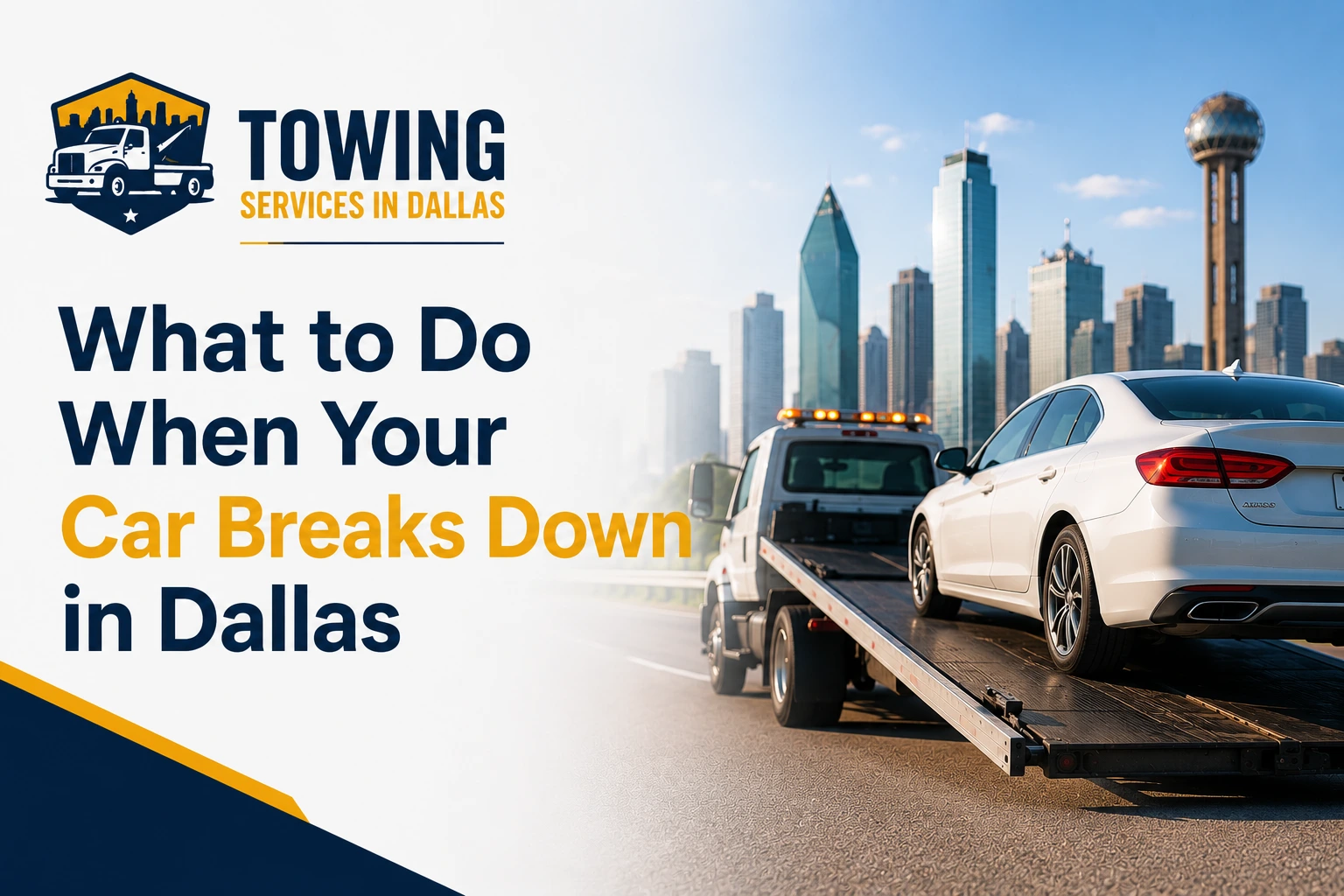
A car breakdown rarely happens at a convenient time. It might occur on Interstate 35E during rush hour, along North Central Expressway, in a quiet neighbourhood in Lake Highlands, or even in a shopping centre car park. Wherever it happens, knowing what to do can help you stay safe and reduce unnecessary stress.
Your first priority is always personal safety. Once you’re out of immediate danger, you can assess the problem, arrange the right assistance, and avoid mistakes that could make the situation worse or lead to expensive repairs.
This guide explains the practical steps to take after a breakdown, when to call for professional help, and how to reduce the chances of finding yourself stranded again.
Prioritise Your Safety Immediately
If your vehicle is still running and can be moved safely, steer it onto the shoulder or another secure location away from moving traffic. In Dallas, busy roads such as I-635, US-75, and the Dallas North Tollway leave little room for error, so getting out of traffic should be your first goal.
Switch on your hazard lights as soon as you realise there’s a problem. If it’s safe to do so, place reflective warning triangles behind your vehicle to increase visibility, especially at night or during heavy rain.
On busy roads, it’s usually safest to stay inside your vehicle with your seatbelt fastened while waiting for assistance. Standing near fast-moving traffic can be far more dangerous than remaining inside the car.
If you must leave the vehicle because of smoke, fire, or another immediate hazard, move everyone well away from traffic and stand behind a roadside barrier if one is available.
Call 911 immediately if:
- You’ve been involved in a collision.
- Anyone is injured.
- Your vehicle is creating a dangerous traffic hazard.
- You feel unsafe because of the location or surrounding conditions.
Assess the Problem Before Taking Action
Once you’re in a safe location, take a moment to identify what’s happening. You don’t need to diagnose the exact fault, but recognising the symptoms helps determine the next step.
Look for obvious warning signs, including:
- Smoke from under the bonnet
- Unusual knocking or grinding noises
- Dashboard warning lights
- Steam from the engine
- Leaking oil, coolant, or other fluids
- A flat tyre
- Difficulty starting the engine
Some problems have straightforward causes. A flat tyre or dead battery may be resolved on the roadside if conditions are safe and you have the right equipment. Others, such as overheating or major engine issues, require professional assistance.
If driving the vehicle could cause further damage, don’t continue your journey. For example, driving with an overheating engine or low oil pressure can turn a manageable repair into a major mechanical failure.
When in doubt, it’s always safer to stop driving and seek expert advice.
Get the Right Roadside Assistance
Choose the Most Appropriate Help
The right assistance depends on the nature of the breakdown.
If you have roadside assistance through your vehicle manufacturer, motor club, or insurance provider, contact them first. Many policies include services such as jump starts, tyre changes, fuel delivery, and towing.
If the vehicle cannot be driven safely, contact a reputable local towing company. Choosing a provider familiar with Dallas roads often means quicker response times and a smoother recovery process. Towing Services in Dallas can assist drivers throughout Dallas and surrounding communities when a vehicle needs professional towing or roadside support.
Before calling, gather the following information:
- Your exact location
- The nearest exit, intersection, or landmark
- Vehicle make, model, and colour
- A brief description of the problem
- Whether the vehicle is blocking traffic
Providing accurate information allows the dispatcher to send the right equipment and reduces delays.
While Waiting for Assistance
Keep your hazard lights on throughout the wait.
Stay alert to your surroundings, particularly if you’re parked near moving traffic or in an unfamiliar area.
If requested, have your driver’s licence, vehicle registration, and insurance details ready.
Although many people genuinely want to help, avoid accepting assistance from strangers if you feel uncomfortable. It’s reasonable to wait for the service provider you’ve contacted, especially if you’ve already received an estimated arrival time.
Handle Common Breakdown Situations Safely
Flat Tyre
If you’re parked well away from traffic on stable, level ground and you know how to change a tyre, replacing it yourself may be an option.
Always use the correct jack points specified by the manufacturer and ensure the vehicle is secure before lifting it.
If your vehicle has a temporary spare tyre, follow its speed and distance limitations. These tyres are intended only to get you safely to a repair facility.
If you’re alongside a busy Dallas freeway or don’t have the proper equipment, it’s safer to request roadside assistance.
Dead Battery
A dead battery is one of the most common roadside problems.
If you’re familiar with the correct jump-start procedure and have suitable jumper cables or a portable jump starter, you may be able to restart the vehicle safely.
Incorrectly connecting jumper cables can damage the electrical system, so don’t attempt a jump start unless you’re confident in the process.
If the battery repeatedly goes flat, it may indicate a charging system issue or an ageing battery that needs replacement.
Engine Overheating
If the temperature gauge climbs into the danger zone or you see steam coming from under the bonnet, pull over immediately.
Switch off the engine and allow it to cool completely before opening the bonnet.
Never remove the radiator cap while the engine is still hot. Pressurised coolant can cause serious burns.
Dallas summers regularly bring extreme heat, which places additional strain on cooling systems. Keeping coolant levels properly maintained helps reduce the risk of overheating during hot weather.
Mechanical Failure or Warning Lights
Some dashboard warning lights require immediate attention.
If you notice low oil pressure, charging system failure, brake system warnings, or significant changes in how the vehicle drives, continuing your journey could cause expensive damage or create a safety risk.
If the vehicle loses power, makes loud mechanical noises, or critical warning lights remain illuminated, arrange for a tow rather than attempting to drive to a repair shop.
What to Do After the Immediate Emergency
Once the immediate situation is under control, decide whether the vehicle can be repaired on-site or should be transported to a trusted repair facility.
If the breakdown involved an accident or may result in an insurance claim, take photographs of the vehicle, the surrounding area, and any visible damage before repairs begin.
Let family members, friends, or colleagues know if your arrival will be delayed, particularly if someone is expecting you.
Keep receipts for towing, roadside assistance, vehicle storage, and emergency repairs. Some insurance policies and roadside assistance programmes reimburse eligible expenses.
Reduce the Chances of Future Breakdowns
Regular maintenance is the most effective way to avoid unexpected roadside problems.
Follow the manufacturer’s recommended service schedule and inspect essential components regularly, including:
- Tyre pressure and tread depth
- Battery condition
- Engine oil
- Coolant level
- Brake fluid
- Windscreen washer fluid
- Drive belts and hoses
Replace worn parts before they fail instead of waiting for a breakdown.
It’s also worth keeping an emergency kit in your vehicle containing:
- Reflective warning triangles
- Torch
- Phone charger or power bank
- First-aid kit
- Basic hand tools
- Drinking water
Before longer journeys, especially during periods of extreme Dallas heat, inspect your vehicle for signs of wear and check all fluid levels. Preventive maintenance is often far less expensive than dealing with an unexpected roadside emergency.
FAQs
What should I do if my car breaks down on a Dallas freeway?
If possible, carefully move your vehicle onto the shoulder or another safe area. Turn on your hazard lights immediately and remain inside the vehicle with your seatbelt fastened if you’re close to fast-moving traffic. Contact roadside assistance or emergency services if your vehicle is creating a hazard or you feel unsafe.
Should I stay inside my car while waiting for help?
In most situations on busy roads, yes. Remaining inside the vehicle is generally safer than standing near traffic unless there’s an immediate danger such as fire, smoke, or the risk of being struck by another vehicle.
Can I call roadside assistance if I don’t know what’s wrong with my car?
Absolutely. You don’t need to diagnose the problem yourself. Describe the symptoms, explain what the vehicle is doing, and provide your exact location. The service provider can determine the most appropriate response.
When should my car be towed instead of driven?
Arrange for towing if the engine overheats, significant fluids are leaking, critical warning lights remain on, the vehicle won’t operate normally, or driving could cause additional damage. When safety or mechanical reliability is uncertain, towing is usually the better option.
Conclusion
A vehicle breakdown can be stressful, but responding calmly makes a significant difference. Focus first on protecting yourself and your passengers, then assess the situation, arrange the right assistance, and avoid driving if it could worsen the problem.
Routine maintenance, regular inspections, and a well-prepared emergency kit can help prevent many roadside issues before they happen. When professional help is needed, working with a dependable local provider such as Towing Services in Dallas can make getting back on the road safer and less stressful.